Difference Bitmap vs. Vector Graphic - Exporting SVGs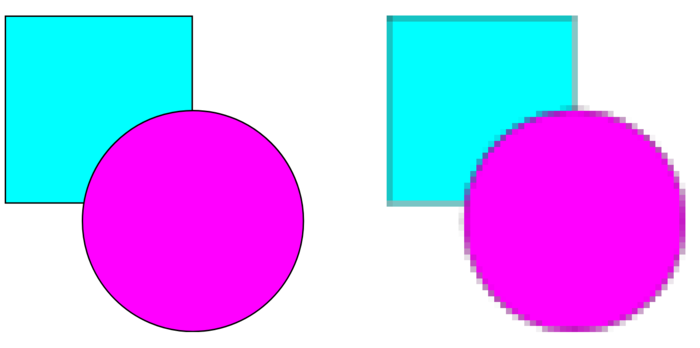
Scalable Vector Graphics (SVG) as basis for figures
Scalable vector graphics (abbreviated SVG) is a standardized open source format based on shapes and paths and is therefore independent of pixels. Raster-based images (containing a bitmapped pixel grid) are also converted in shapes and paths containing colors and intensities but area free of the initial corset of the pixel grid.
Data are organized in an XML based text format and can even be modified in simple text editors. Biggest advantage is that image transformations are loss-free and do not need to use interpolation (never!). Therefore, data contained in the image added to an SVG file will not be altered by resizing or rotating.
To avoid pixel artifacts, data alteration or loss the best way to make figures is by using vector graphics based software. The following software can be a good choice for making figures and rather depends on the personal taste or specific needs. But all of them provide necessary functionalities to make a proper publication figure.
Below you see two shapes. While the left one is saved as SVG and looks smooth at each scale, the right one is a .png image and therefore a bitmapped raster image on pixel basis. Any change in scale in a pixel-based software in such an image will also change the content and the accuracy in which it is displayed.
Scalable vector graphics (abbreviated SVG) is a standardized open source format based on shapes and paths and is therefore independent of pixels. Raster-based images (containing a bitmapped pixel grid) are also converted in shapes and paths containing colors and intensities but area free of the initial corset of the pixel grid.
Data are organized in an XML based text format and can even be modified in simple text editors. Biggest advantage is that image transformations are loss-free and do not need to use interpolation (never!). Therefore, data contained in the image added to an SVG file will not be altered by resizing or rotating.
To avoid pixel artifacts, data alteration or loss the best way to make figures is by using vector graphics based software. The following software can be a good choice for making figures and rather depends on the personal taste or specific needs. But all of them provide necessary functionalities to make a proper publication figure.
Below you see two shapes. While the left one is saved as SVG and looks smooth at each scale, the right one is a .png image and therefore a bitmapped raster image on pixel basis. Any change in scale in a pixel-based software in such an image will also change the content and the accuracy in which it is displayed.
Suitable software for figure creation:
- Inkscape (open source and free)
- QuickFigures plugin from Fiji (open source and free)
- AffinityDesign
- Adobe Illustrator or InDesign (commercial)
- Corel Draw (commercial)
- PowerPoint, Word, Draw,... basically all standard Office suite software
- Pixel-based software such as Photoshop, Gimp or plain ImageJ/Fiji
- Desktop publishing or layout software might be limited but possible to use (e.g. InDesign, Scribus)