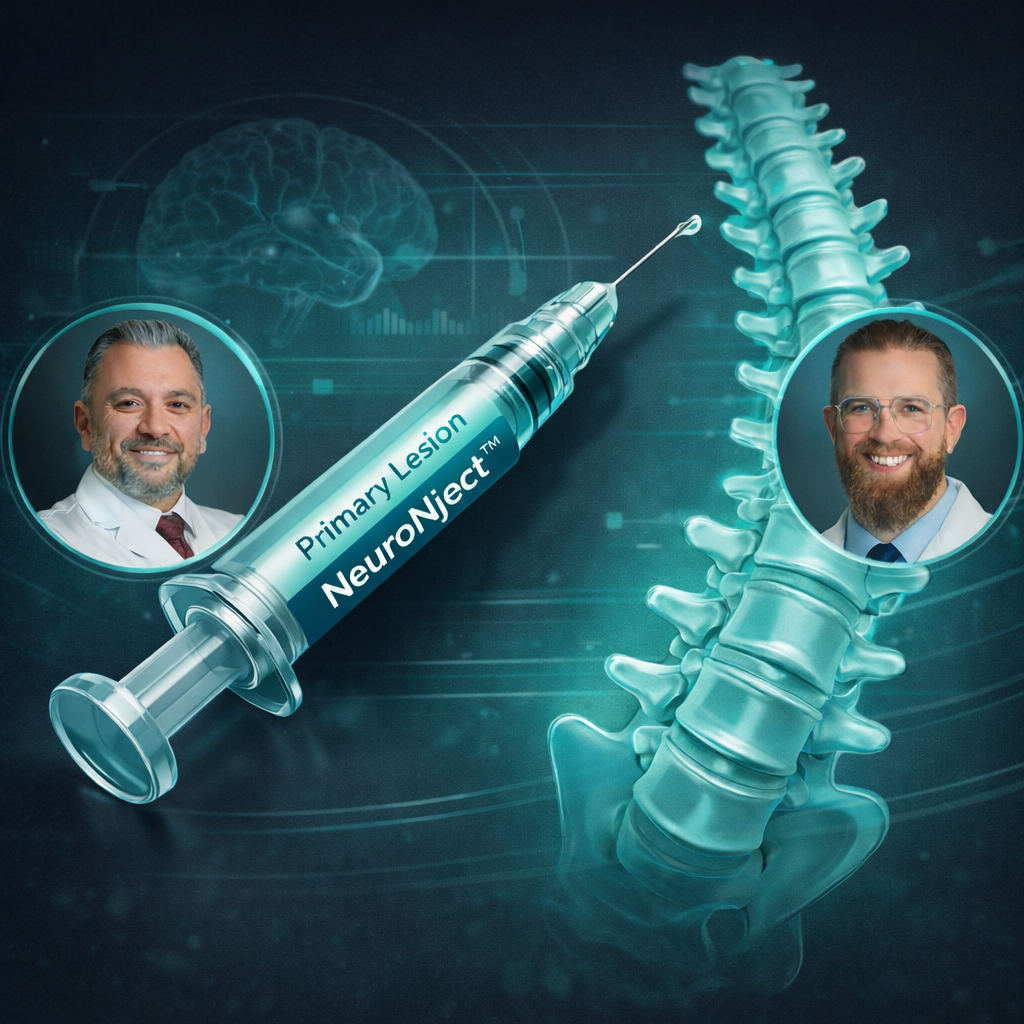
Clinical primary-lesion diagnostics, causal therapy & perineural neuroregeneration &
The DR. RAYESS TECHNIQUE (Rayess Spine) & the SCHÖNING TECHNIQUE (NeuroNject) for therapy-resistant musculoskeletal and neuropathic conditions.
Documented functional changes immediately after a targeted intervention.
Uncut. Clinically observable. Reproducible.
For experienced practitioners • professional fit is decisive
The Dr. Rayess Technique
Primary-lesion-based diagnostics & therapy in clinical practice.
The following recordings show functional changes after targeted biomechanical correction of a previously unidentified primary lesion.
Leg tremor
Failed back surgery syndrome
Fibromyalgia
Balance impairment
Hyperlordosis
The Schoening Technique (NeuroNject)
Perineural neuroregeneration for chronic pain syndromes and neurological conditions
The videos document the modulation of chronically impaired peripheral nerves via perineural application of 5% dextrose.
Herpes Zoster
Foot Drop
Tremor
Impingement
Cervical Spine
Clinical rationale and therapeutic implications
Interview with Dr. Adel Rayess, Florian Schöning and Dr. Helmut Retzek
This in-depth expert conversation places the demonstrated clinical effects in diagnostic and therapeutic context and explains the clinical rationale as well as the development of the combined approach.
Note: Watching the interview is optional and not required in order to book participation.
The intensive seminar
Seminar structure
Professional fit
Clinical lead & faculty

Frequently asked questions
How does the Rayess Technique differ from classic manual-therapy approaches?
How does perineural neuroregeneration differ from prolotherapy?
It is not understood as a tissue-irritation therapy, but as a neurophysiologically oriented complement to primary-lesion-based diagnostics and therapy.
Do I need prior experience with injection techniques?
How many treatments are typically required?
Through clear prioritization of the primary lesion, relevant functional changes may occur already after a single targeted intervention. The goal is not a standardized number of sessions, but a targeted steering of the further course.
How often does a patient typically need to come in?
For which complaints is this approach generally applicable?
It is used particularly for therapy-resistant musculoskeletal and neuropathic complaints, provided that a clinically relevant primary lesion or neural involvement is present.
Book your seat
This seminar is intended for experienced practitioners who want to systematically connect clinical precision with neurophysiological effectiveness.
Free cancellation is possible up to 30 days before the seminar begins.
For cancellations 29 to 14 days before the start, 50% of the seminar fee will be retained.
For cancellations from 13 days before the start or in case of no-show, the full seminar fee is due.
Naming a replacement participant is possible at any time free of charge.